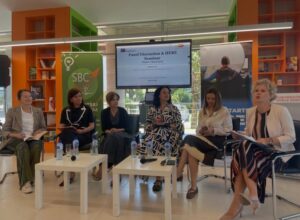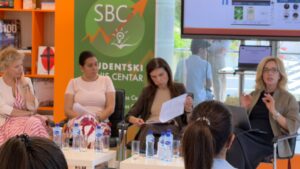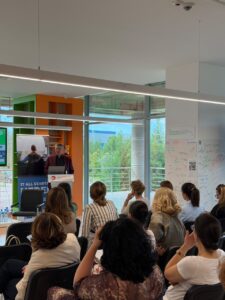
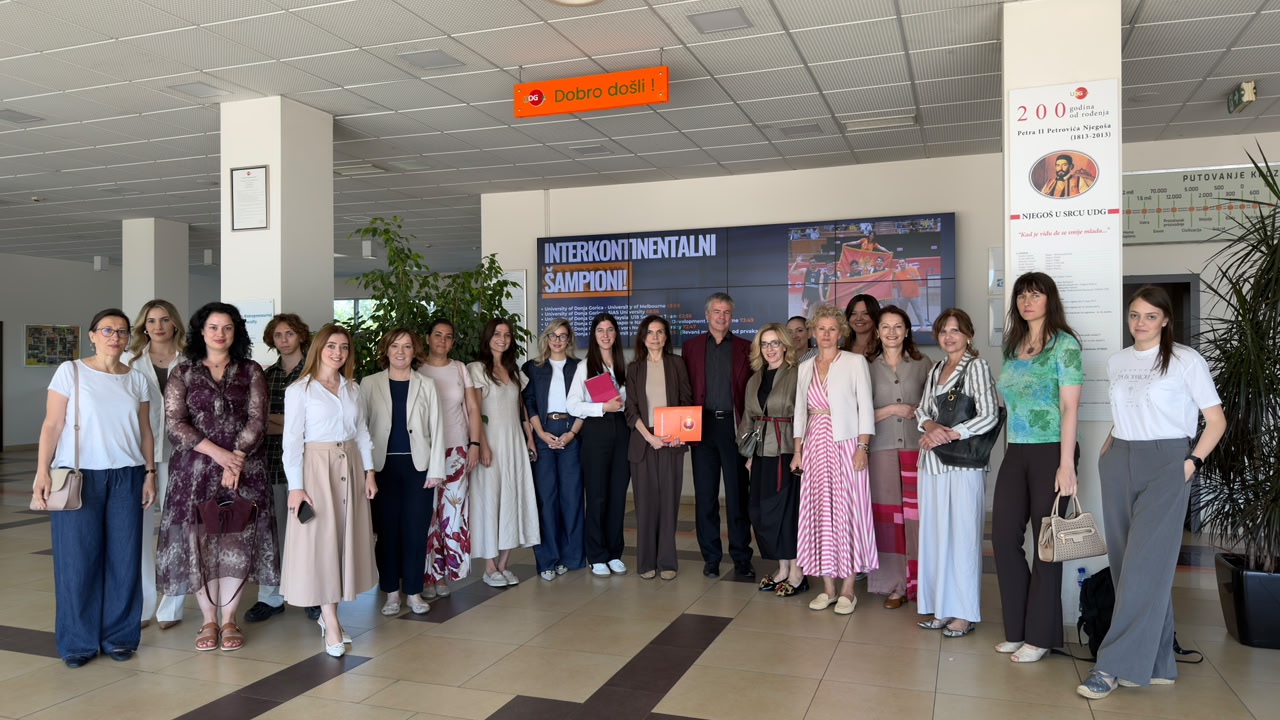
We are pleased to inform you that yesterday and today, the HERE seminar entitled “Future Classroom” was held at the premises of the University of Donja Gorica. This seminar was organized together with an introductory panel discussion marking Europe Month, entitled “Ready for EU? Perspectives of Higher Education and the Role of the Erasmus+ Programme.”
The event brought together representatives of the academic community, national authorities, experts, and interested participants to discuss the future of higher education and the transformation of teaching and learning processes. The seminar was organized by the National Erasmus+ office in Montenegro, at the initiative of the Montenegrin team of higher education reform experts (HERE team), with the support of the SPHERE team – OBREAL Global and the European University Association. The introductory panel discussion featured prof. Mira Vukčević, University of Montenegro, HERE team president; prof. Ivana Ognjanović, University of Donja Gorica; prof. Sanja Peković, University of Montenegro, HERE team member; Ms. Sanja Pavićević, Ministry of Education, Science and Innovation of Montenegro and the discussion was moderated by Ms. Dragica Anđelić, HERE team member and Vanja Drljević, Head of the National Erasmus+ Office in Montenegro. On the second day of the seminar, within the framework of a round-table discussion, presentations were delivered by prof. Maja Delibašić, Mediterranean University; prof. Jelena Šaković Jovanović, University of Montenegro and prof. Maja Drakić Grgur, University of Donja Gorica.
During the two-day seminar, participants discussed how higher education should respond to rapid changes in the labour market and the growing need to develop future-oriented competencies. Particular attention was given to the transformation of teaching and learning processes, more flexible and student-centred education models, and the use of modern educational technologies in creating the classrooms of the future.
Special focus was placed on the role of artificial intelligence in higher education. Participants explored how AI can enhance the learning experience through personalized approaches, support teachers in course preparation and assessment, enable more efficient data analysis and foster the development of innovative teaching methods. At the same time, important challenges related to its implementation were addressed, including ethical considerations, data protection, academic integrity, and the need to strengthen the digital competencies of both academic staff and students.
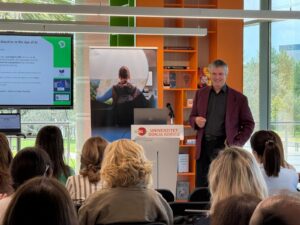
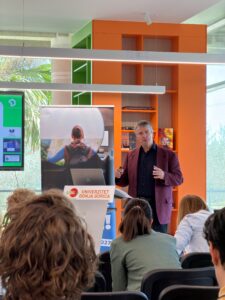
The seminar’s guest speaker was prof. Rulf Jürgen Treidel, Fachhochschule des Mittelstands, Bielefeld, Germany. In his presentation, he introduced contemporary approaches to the Future classroom concept, showcased examples of good practice in integrating digital tools and artificial intelligence into teaching, and highlighted ways in which higher education institutions can develop innovative, flexible, and sustainable learning environments.
The seminar presentations are available below: